Walk through any auction house in America and look at the way the team is organized. The auctioneer is up on the block. The ringman is in the crowd. The block clerk is sitting at a laptop, usually off to the side, often half-hidden behind the auctioneer's podium, sometimes literally a folding table near the wall.
The physical layout tells the whole story. Ringmen are seen. Block clerks are tolerated.
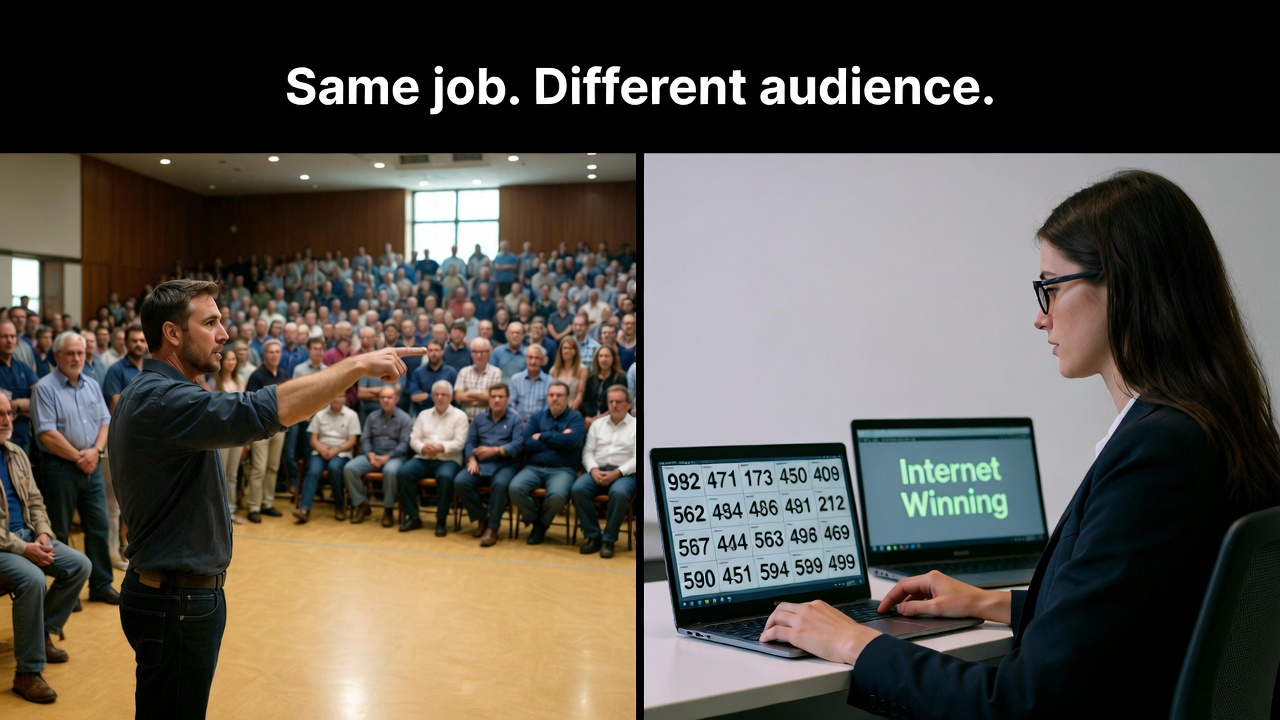
That layout, that hierarchy, that whole way of thinking about who matters, made sense when 100% of an auction's bidders were in the room. It does not make sense anymore. Today the block clerk has a job the ringman literally cannot do, for an audience the ringman cannot reach. The block clerk is the ringman for everyone bidding from a phone in another state.
The block clerk is the internet ringman. And once you see it that way, the way you staff the role, and the way you market your auction to consignors and bidders, changes.
What a ringman actually does
Strip away the energy and the showmanship. The ringman's real job is short:
- Find bidders the auctioneer can't see.
- Translate their interest into the auctioneer's language by calling out bids loud enough for the block to hear.
- Push hesitant bidders past the next increment.
- Keep the bid moving until the gavel falls.
That's it. The clipboard, the headset, the eye contact, the leaning in are tactics. The job underneath is bid liaison. A great ringman is the auctioneer's extension of attention into a room full of buyers the auctioneer can't individually track.
What a block clerk actually does in 2026
Now look at the block clerk's real job in a modern auction:
- Find bidders the auctioneer can't see, specifically the ones bidding from anywhere outside the room.
- Translate their bids into the auctioneer's language by calling out "Internet bid $5,300" the moment an online bidder takes the high, the same way a ringman shouts "Yep!" from the floor.
- Push hesitant bidders past the next increment by keeping remote bidders current with the live auction in real time, so online buyers know exactly where the bid stands and can jump back in before the gavel falls.
- Keep the bid moving until the gavel falls.
It's the same list. The medium changed, the job didn't. The block clerk is liaising between the auctioneer and a room full of buyers the auctioneer can't individually track. That's a ringman's job description with the audience swapped out.
"Clarity depends on contrast. Without contrast, comparison is impossible." — Daniel Pink, To Sell is Human
Pink is right about clarity. Putting the ringman and the block clerk side-by-side is the contrast that clarifies the block clerk's real role. Once you see them as the same job, the question of how to staff, train, and pay them stops being a debate and starts being arithmetic.
A real example: the auctioneer who hired a second ringman by mistake
A regional household-goods auctioneer we know, let's call her Maggie, ran into the staffing version of this insight by accident.
Maggie had a single ringman, a longtime employee, who was getting older and physically tired by the end of a six-hour Saturday. Maggie hired a second ringman to share the floor with him. The veteran ringman, polite to a fault, asked the new hire to take the "easier" section, the section nearest the auctioneer, which had become the section where most of the in-room bidding had quieted down because most of the action had moved online.
So the new ringman ended up effectively unused on the floor. Maggie, looking for something for him to do, sat him next to the block clerk during the third Saturday and said "watch the laptop, call out the internet bids to me as they come in."
That Saturday's hammer total was up 14% over the prior month's average. Same auctioneer, same inventory, same crowd. The only change: an actual ringman's voice and instincts, applied to the online bidder feed instead of to the room.
Maggie didn't hire a second ringman. She accidentally hired her first internet ringman. She just didn't have a name for the role yet.
Why naming the role matters
The label "block clerk" carries a hundred years of baggage. It implies clerical work, bookkeeping, recording, paperwork. The job description that bubbles up when you post for "block clerk" on a job board is "data entry, attention to detail, dependable." You'll get applicants who are organized and detail-oriented. You won't get applicants who can think like a salesperson and call bids like an auctioneer.
The label "ringman" carries a different bag. It implies floor work, reading the room, pushing the deal, knowing the regulars. The applicants for that role are different humans with different instincts. They're salespeople, not clerks.
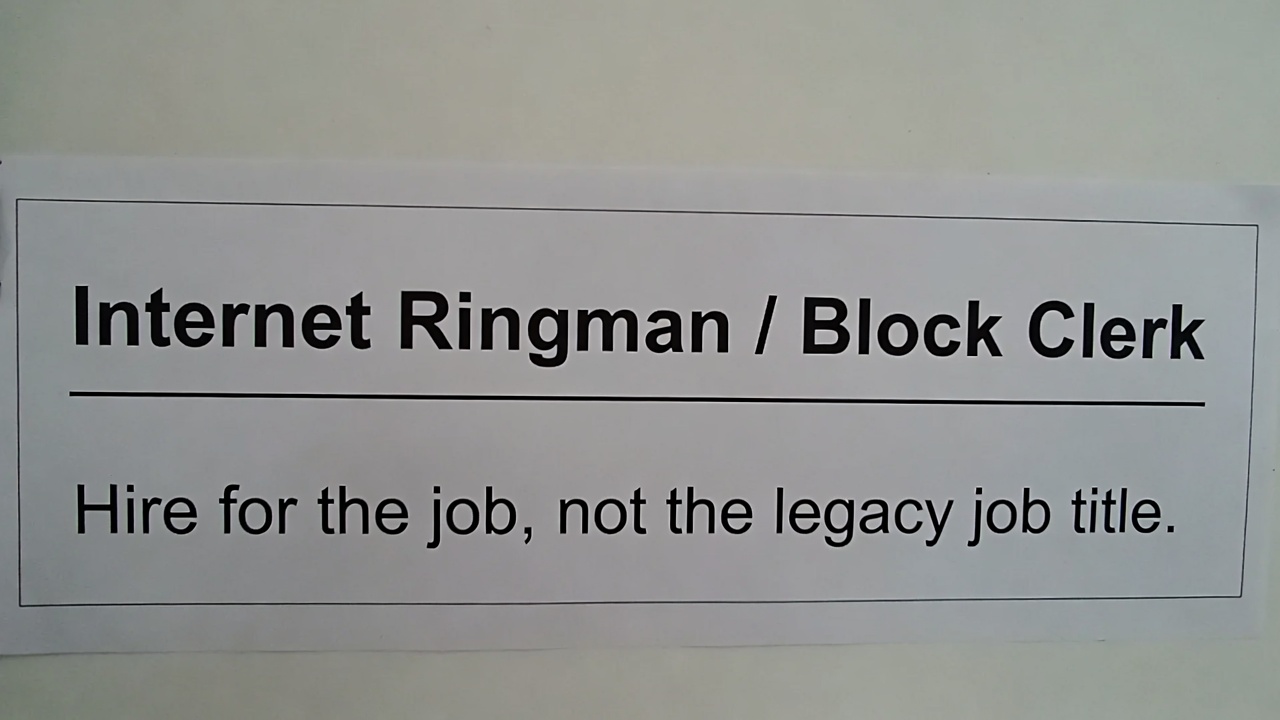
If your job posting says "block clerk" and the actual job is "internet ringman," you're recruiting the wrong human against the wrong description. You'll get a great clerk and a mediocre ringman in the same person and wonder why your online hammer prices feel a step behind your floor.
What changes when you treat the block clerk as a ringman
The reframe isn't just semantic. Six concrete things shift:
- You hire differently. You stop looking for "detail-oriented and dependable." You start looking for "reads people, fast on a keyboard, comfortable calling out 'Internet bid $5,300' loud enough for the auctioneer to hear without breaking the rhythm."
- You train differently. A clerk gets trained on data entry. A ringman gets trained on bid escalation, increment psychology, and reading the moment. The internet ringman needs the second curriculum.
- You position them differently in the room. A clerk gets stuck behind a wall. A ringman is up front. The internet ringman should be next to the auctioneer or close enough to call up to the block.
- You pay them differently. The economic logic of paying a real ringman well is exactly the same logic for the internet ringman.
- You give them better tools. A clerk needs a spreadsheet. A ringman needs a fast-twitch interface with one-tap raise/lower, an unmistakable Internet Winning indicator, and three-way close buttons.
- You market the role to consignors. "We have a dedicated internet ringman calling every online bid in real time" is a sales line that lands. "We have a block clerk doing data entry" is not.
Tell consignors what they're actually buying
This is where the reframe earns its keep on the marketing side. Consignors choosing between auctioneers don't care about your software stack, but they care intensely about whether their lots get every dollar they could.
Walk a consignor through it the next time they ask why your fee is what it is:
"You're paying for two ringmen, not one. The first one works the room. The second one works the internet. They're both watching for buyers the auctioneer can't see. They're both calling out bids loud and pushing those buyers past the next increment. The difference is one of them is on the floor and the other is at a laptop. Together they bring you everybody who's willing to bid on your stuff, not just the ones who could drive here on a Saturday."
That paragraph is a sales line. Try it. The consignor signs.
The auctioneer who's ahead of this
The auctioneer who is ahead of this reframe is already doing some version of three things:
- They have stopped calling the role "clerk" internally. "Internet ringman" or "online ringman" or "bid caller" — whatever lands in your house. The new label changes who applies for the job.
- They've put the role next to the auctioneer, physically. Not behind a wall. Not on a folding table. On the block, in the auctioneer's direct line of sight, with a screen the auctioneer can also glance at.
- They've invested in software that turns the role from clerical into liaison. See block-clerking on Selling Lane: pre-loaded lots, one-tap bid increments, an Internet Winning indicator the auctioneer can read at a glance, and three-way SELL/No Sale/If Sale closes that match the speed of the gavel. The software is the part that lets a fast-thinking ringman work the internet at the same speed they used to work the floor.
The bigger marketing point
Auctioneers are great at running auctions and bad at renaming auction work as the work changes. The industry is full of role labels, "clerk," "catalog tech," "intake assistant," that describe what the job was when somebody first put a label on it, not what the job is today.
If you're running a hybrid auction in 2026, the most important rename you can make this year is treating your block clerk as your internet ringman.
Same job. Different audience. Massively different value to your auction. The leadership case for staffing both ringman roles like they matter is in the companion post. This one is the marketer's argument for the rename. Both end at the same place: pay attention to the role, give it the right name, give it the right tools, watch your hammer prices climb.